Published on
- 7 min read
Roth IRA vs Traditional IRA: Which One Is Right for You?
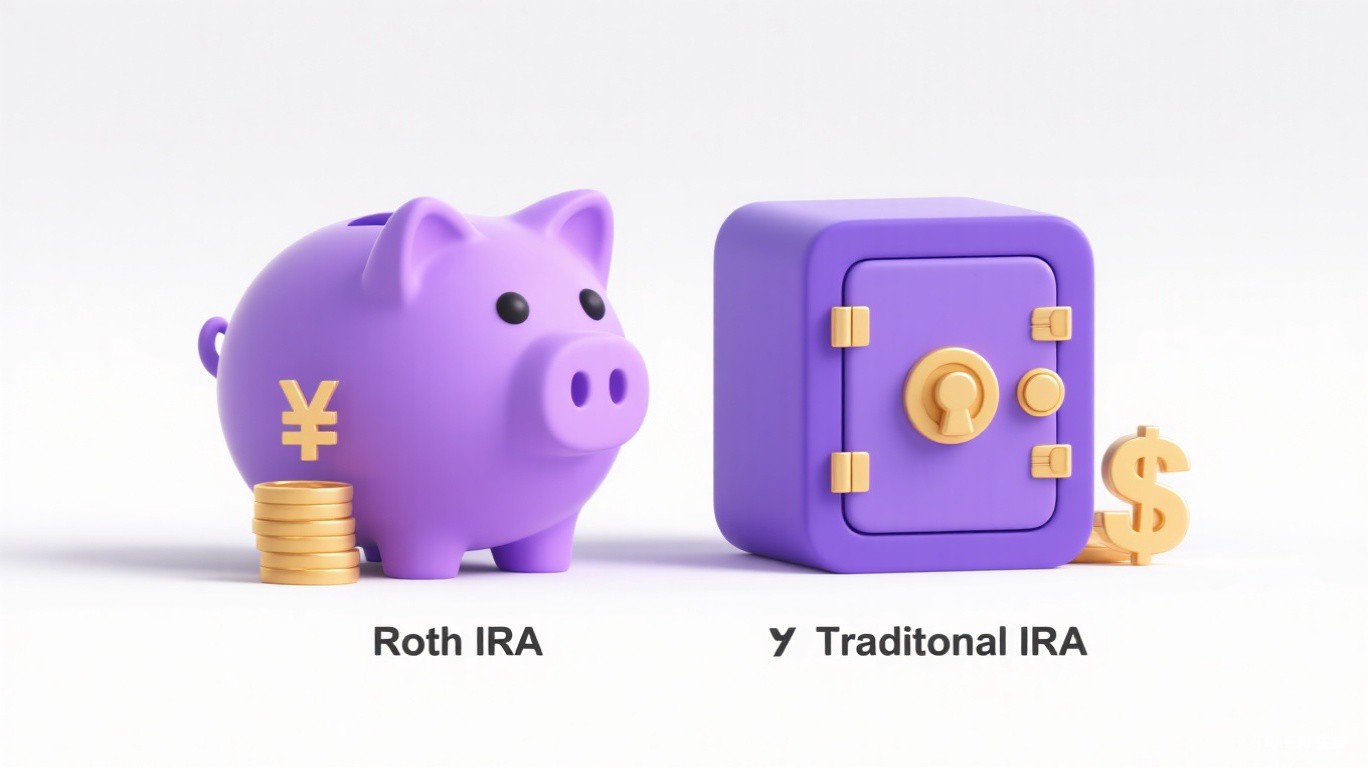
When it comes to building a comfortable retirement, the decisions you make today about where to save your money can cost you — or save you — hundreds of thousands of dollars over decades. One of the biggest questions Americans face is: Roth IRA or Traditional IRA?
Both offer powerful tax advantages that can dramatically accelerate your wealth building. But they work in opposite ways, and choosing the wrong one can mean paying unnecessary taxes or missing out on significant savings.
The Fundamental Difference
The core distinction is simple but critically important: when do you pay taxes?
Traditional IRA: You save money on taxes today. Contributions may be tax-deductible, meaning the government reduces your taxable income by the amount you contribute, and your money grows tax-deferred. You pay ordinary income taxes when you withdraw money in retirement.
Roth IRA: You pay taxes today. Contributions are made with after-tax dollars, meaning you have already paid income tax on that money. But once it is inside a Roth IRA, every cent — contributions AND growth — can be withdrawn completely tax-free in retirement, as long as you follow certain rules.
Think of it this way: with a Traditional IRA, you are deferring the tax bill to retirement. With a Roth IRA, you are paying it upfront and getting a permanently tax-free account in return.
Understanding the 2026 Contribution Limits
Both accounts have annual contribution limits set by the IRS, and these limits change each year due to inflation. For 2026, the contribution limit is $7,000 per year. If you are age 50 or older, you can make an additional catch-up contribution of $1,000, bringing your total to $8,000.
Unlike a 401(k), which is tied to your employer, IRAs are personal accounts that you open and fund on your own. The deadline to contribute for any given tax year is typically April 15 of the following year — giving you nearly 16 months to make contributions for a specific year.
Roth IRA: The Complete Breakdown
Advantages of Roth IRA
1. Tax-Free Growth All withdrawals in retirement — including every penny of investment gains — are completely tax-free. This is the single biggest advantage of a Roth IRA. If you invest $7,000 per year and earn 8% annually for 30 years, you will have approximately $850,000. With a Roth IRA, every single dollar of that growth is yours, tax-free.
2. No Required Minimum Distributions (RMDs) Unlike Traditional IRAs and 401(k)s, Roth IRAs do not force you to take money out at a certain age. You can let your money grow for your entire life, making Roth IRAs especially powerful for those who do not need the money at age 73.
3. Flexibility with Contributions Unlike a 401(k), you can withdraw your Roth IRA contributions (not earnings) at any time, for any reason, without penalty. This makes Roth IRAs a useful emergency fund in addition to a retirement account. If you have contributed $50,000 over the years, you can withdraw that $50,000 anytime without penalty.
4. Protection Against Future Tax Increases If Congress raises income tax rates in the future — which they inevitably will — Roth IRA holders are protected. You paid taxes at today’s rates and your money grows and withdrawals are tax-free regardless of future tax law changes.
5. Ideal for Leaving an Inheritance If you pass away, your Roth IRA can be inherited by your beneficiaries tax-free. They will not owe income taxes on withdrawals, making Roth IRAs one of the most tax-efficient ways to leave money to heirs.
Disadvantages of Roth IRA
1. No Upfront Tax Deduction You do not get an immediate tax break when you contribute to a Roth IRA. This is the biggest trade-off. If you are in a high tax bracket now, you might prefer to get the deduction today.
2. Income Limits Roth IRA contributions are reduced or eliminated at certain income levels. For 2026, if you earn more than $150,000 as a single filer or $236,000 as a married couple filing jointly, your contribution limit begins to phase out. Above $161,000 (single) or $246,000 (married), you cannot contribute at all.
3. Less Benefit if Tax Rates Drop If you are in a high tax bracket now but expect to be in a lower tax bracket in retirement, you may be overpaying taxes by paying upfront.
Traditional IRA: The Complete Breakdown
Advantages of Traditional IRA
1. Upfront Tax Deduction If you qualify, your Traditional IRA contributions are tax-deductible. This reduces your taxable income by up to $7,000 ($8,000 if over 50) in the year you contribute. If you are in the 24% tax bracket and contribute $7,000, you save $1,680 in taxes that year.
2. Higher Contribution Limits for High Earners Unlike Roth IRAs, there are no income limits for contributing to a Traditional IRA. Anyone who has earned income can contribute, regardless of how much they earn.
3. Useful If Tax Rates Drop If you expect to be in a significantly lower tax bracket in retirement — perhaps you plan to move to a no-income-tax state or expect tax rates to fall — deferring taxes makes more sense.
4. Required Minimum Distributions Encourage Discipline While RMDs can feel like a burden, they also ensure you do not over-accumulate money in your retirement account and force you to take required withdrawals.
Disadvantages of Traditional IRA
1. Required Minimum Distributions You must begin taking Required Minimum Distributions (RMDs) at age 73 (as of 2023). These distributions are taxed as ordinary income and, if you do not need the money, you are forced to take it anyway. This can create an unwanted tax burden.
2. Full Taxation in Retirement Every dollar you withdraw from a Traditional IRA in retirement is taxed as ordinary income. This includes your original contributions, which you already deducted from your taxes, plus all investment gains.
3. Less Flexibility Unlike Roth IRAs, you cannot withdraw contributions (not earnings) penalty-free. If you need to access your money before age 59½, you will face a 10% early withdrawal penalty plus income taxes on the amount.
4. Tax Uncertainty If tax rates increase significantly in the future, Traditional IRA holders will face a larger tax bill than expected.
Which Should You Choose?
Choose Roth IRA If:
- You expect to be in a higher tax bracket in retirement than you are today
- You are young and have decades of tax-free growth ahead of you
- You already have a 401(k) with pre-tax money and want tax diversification
- You want to leave money to heirs (Roth inherits are tax-free to beneficiaries)
- You cannot afford both — Roth grows tax-free forever, making it more valuable over time
- You are a first-time homebuyer — you can withdraw up to $10,000 penalty-free for a home purchase
Choose Traditional IRA If:
- You need the immediate tax deduction to lower your current tax bill
- You expect tax rates to be significantly lower in retirement
- You are close to retirement and need RMDs to manage your account
- You are in a high-tax profession now but plan to move to a low-tax area
- You do not qualify for a Roth IRA due to income limits
The “Both” Strategy
Here is a secret that many financial advisors recommend: contribute to both.
If you can afford to contribute $7,000 per year, consider splitting it:
- $3,500 to a Traditional IRA (for the tax deduction)
- $3,500 to a Roth IRA (for tax-free growth)
This approach gives you:
- Tax diversification in retirement
- Flexibility to draw from either account as needed
- Protection against unknown future tax rates
- The best of both worlds
The Backdoor Roth Strategy
If you earn too much for a Roth IRA directly, you can still get money into a Roth through the “Backdoor Roth” strategy:
- Contribute to a Traditional IRA (non-deductible contribution)
- Convert the Traditional IRA to a Roth IRA
- Pay taxes on any gains that occurred before the conversion
This is completely legal and a widely used strategy for high earners. The key is to perform the conversion quickly (ideally within days) to minimize the taxes owed on gains.
A Simple Decision Framework
Answer this one question: Do you think your tax rate in retirement will be higher or lower than your tax rate today?
- Higher in retirement? → Roth IRA (pay taxes now at a lower rate)
- Lower in retirement? → Traditional IRA (defer taxes to a lower rate)
- About the same? → Either works, but Roth’s flexibility gives it an edge
- Unsure? → Split contributions between both for tax diversification
The Bottom Line
Both Roth and Traditional IRAs are powerful tools for retirement savings. The good news? You do not have to choose just one. Many financial experts recommend having money in both types of accounts to give yourself maximum flexibility in retirement.
The most important thing is to start contributing. Whether you choose Roth or Traditional, the power of tax-advantaged compounding will work in your favor over time.
Do not let confusion about the “right” choice prevent you from saving. The act of saving itself — in any tax-advantaged account — is far more important than getting the tax treatment perfect.
Related Articles

Why Your Savings Account is Costing You Money
Discover why keeping all your money in a traditional savings account might be silently eroding your ...

Compound Interest: The Most Powerful Force in Finance
Discover why Einstein called compound interest the eighth wonder of the world and how to harness its...

401(k): Your Employer Is Offering Free Money
Do not leave free money on the table. Learn why employer 401(k) matching is the easiest wealth-build...