Published on
- 5 min read
401(k): Your Employer Is Offering Free Money
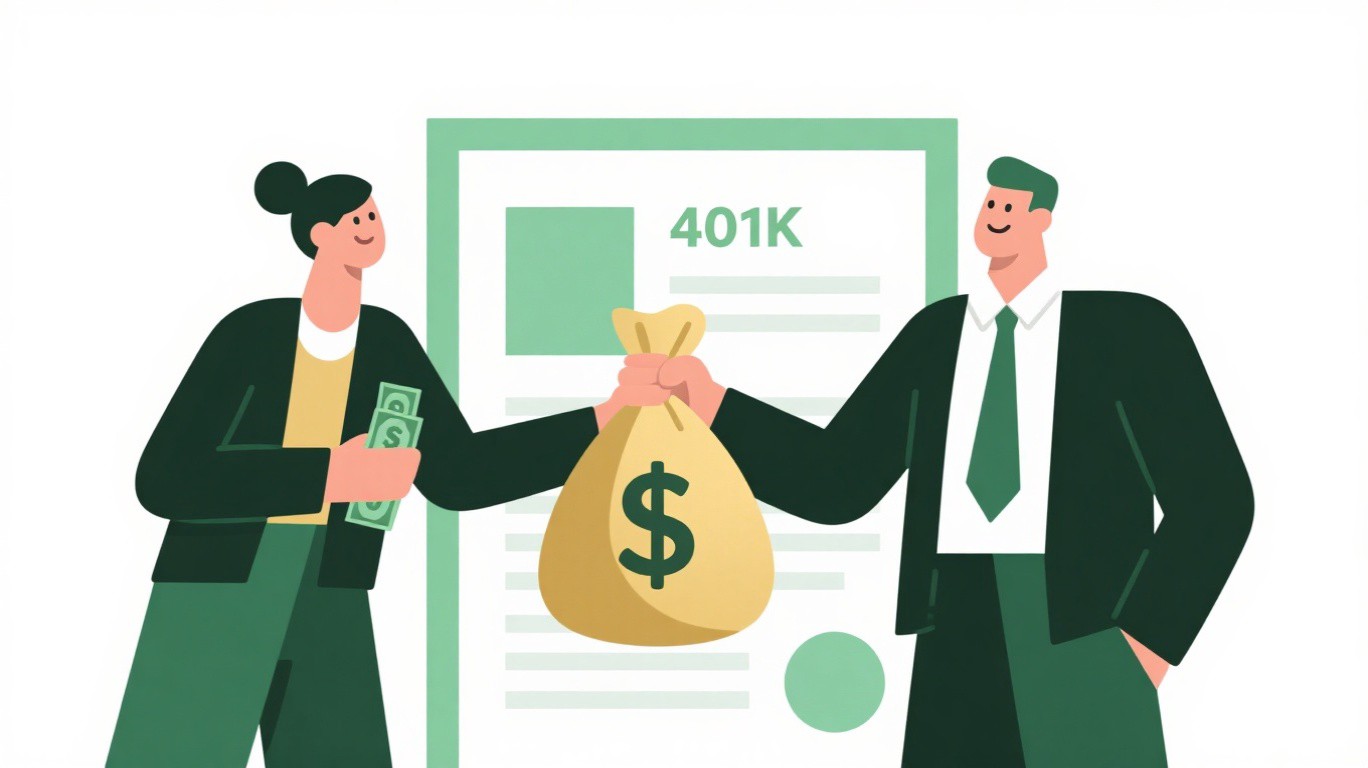
If your employer offers a 401(k) match, not contributing enough to get the full match is one of the most expensive financial mistakes you can make — and the worst part is you will never even notice the money you left on the table. A 50% match on 6% of your salary means your employer adds $3,000 to your retirement account for every $6,000 you contribute, assuming a $50,000 annual salary.
That is a 50% return on your money, guaranteed, before the stock market does anything. There is no investment on earth that consistently offers that kind of risk-free return. Vanguard’s annual How America Saves research consistently finds that a significant share of eligible employees — roughly one in three — do not contribute enough to their 401(k) to receive the full employer match, leaving thousands of dollars per year on the table.
Figure 1: Employer matching is free money — not taking it is like refusing a raise. How Employer Matching Actually Works The structure of employer matching varies by company, but the most common arrangement is dollar-for-dollar matching up to a certain percentage of your salary. For example, your employer might match 100% of your contributions up to 3% of your salary, then match 50% of contributions up to another 3%.
This means if you contribute at least 6% of your salary, you receive the full match. If you contribute only 3%, you get half the possible match. If you contribute nothing, you get nothing. The IRS limits how much you can contribute to a 401(k) in 2024: $23,000 if you are under 50, or $30,500 if you are 50 or older (the extra $7,500 is the catch-up contribution).
Employer matching contributions do not count against these limits — so if your employer matches generously, you can still end up with more than $23,000 in your account in a given year. Some employers also offer a profit-sharing contribution, which is additional money they contribute based on company performance regardless of what you save.
This is completely separate from matching and should be treated as a bonus — it goes straight into your retirement account. Figure 2: Consistent 401(k) contributions grow into substantial retirement savings over time. The Tax Advantage Is the Second Gift Traditional 401(k) contributions reduce your taxable income in the year you contribute them.
If you are in the 22% tax bracket and contribute $500/month to your 401(k), your taxable income decreases by $6,000 that year. At a 22% marginal rate, that saves you $1,320 in federal income taxes — in addition to the money your employer matched. The contribution costs you less than the headline number because the government effectively pays part of it back through lower taxes.
Roth 401(k) options work the opposite way: you pay taxes on the money before contributing it, but all qualified withdrawals in retirement — including decades of growth — are completely tax-free. For people who expect to be in a higher tax bracket in retirement, the Roth option is usually the better choice.
For most people starting their careers in lower tax brackets, the traditional 401(k) deferral makes more sense. The IRS estimates that only about 10% of 401(k) participants have a Roth option, so if your employer offers one, it is worth seriously considering whether the up-front tax cost is worth the decades of tax-free growth.
Figure 3: Tax-deferred growth in a 401(k) means more money compounds without annual tax drag. What to Actually Invest In Inside Your 401(k) Most people overthink this. Target-date funds (TDFs) are a single investment option that holds a diversified mix of stocks and bonds and automatically rebalances and becomes more conservative as you approach retirement.
If your 401(k) offers a TDF with a date close to when you expect to retire, simply investing entirely in that one fund is a completely reasonable strategy that most professional financial advisors would endorse. If you prefer to build your own portfolio, most 401(k) plans offer low-cost index funds that track the S&P 500 (large US companies), the total bond market, and international stocks.
A simple three-fund portfolio using these options is sufficient for most investors: a US stock index fund, an international stock index fund, and a bond index fund. Watch out for funds with expense ratios above 0.50% — those are charging you $5 per year for every $1,000 invested. Index funds that track the market commonly charge $1-3 per $1,000.
Over 30 years with $300,000 in your account, the difference between a 0.50% expense ratio and a 0.05% index fund is approximately $45,000 in unnecessary fees. Figure 4: Raising your contribution rate by even 1-2% can dramatically increase your retirement nest egg. Your 401(k) Action Plan Log in to your 401(k) portal today and confirm whether your employer matches.
If they do, confirm the exact percentage required to get the full match. If you are not at that threshold, increase your contribution rate by at least enough to get the full match before anything else. Look at the expense ratios on your fund options. If a fund is charging more than 0.40% and you are paying for actively managed funds, consider switching to index funds.
Most large 401(k) plans offer at least one index fund option. If your plan offers a Roth 401(k) option, run the numbers: calculate whether you would rather pay taxes now at your current rate or later at a projected retirement rate. If you expect to be in a higher bracket in retirement, choose Roth. Set contribution increases on autopilot.
Most plans allow you to set an annual automatic increase of 1-2% per year. Use this feature. You will not notice the money, and it forces you to save more without requiring ongoing willpower. Tags: 401k Guide | Employer 401k Match | Retirement Planning | Tax-Advantaged Accounts | Roth 401k | Personal Finance for Beginners
Related Articles

Why Your Savings Account is Costing You Money
Discover why keeping all your money in a traditional savings account might be silently eroding your ...

Compound Interest: The Most Powerful Force in Finance
Discover why Einstein called compound interest the eighth wonder of the world and how to harness its...

ETF Investing for Beginners: Your Simple Path to Wealth
Learn why ETFs are the perfect investment vehicle for beginners and how to start building wealth wit...