Published on
- 5 min read
How to Save $1,000 a Month: A Realistic Guide
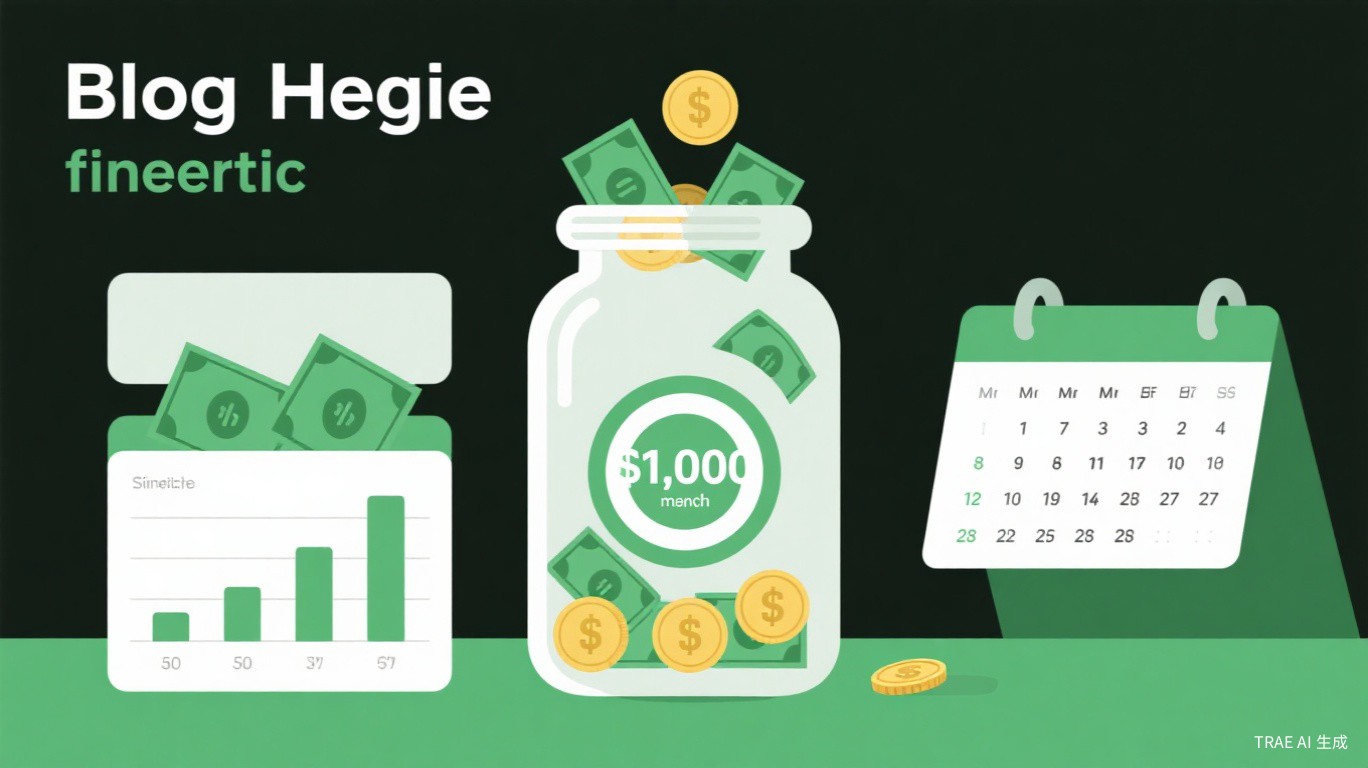
for Ordinary People $1,000 a month is $12,000 a year. Over 10 years, it is $120,000 before any interest or investment returns. Over 30 years at a modest 7% annual return, it becomes approximately $1.2 million. That number is not a fantasy — it is the realistic result of consistent, disciplined saving.
But here is the catch: you have to actually do it. And most people do not, not because they cannot afford it, but because they never built a system that makes it automatic. This guide is not about drastic lifestyle changes or giving up everything you enjoy. It is about finding the real gaps in your spending and redirecting them without feeling the pain.
Figure 1: Knowing where your money goes is the first step to saving more of it. Step 1: Track Your Spending First You cannot save $1,000 a month without knowing where $1,000 currently goes. Most people have a completely wrong mental model of their own spending. The Bureau of Labor Statistics reports that the average American household spends approximately $6,545 per month — and when surveyed, most people estimate their own spending at roughly half that number.
The gap between perceived and actual spending is enormous, and it is the reason most saving attempts fail. For one full month, track every dollar you spend. Every subscription. Every coffee. Every random Amazon purchase you forgot about. You can do this manually, or simply use your bank’s free spending tracker.
The goal is not to judge yourself — it is to see the full picture. You will be shocked by what you find. Research from the University of Minnesota found that simply writing down what you spend reduces unconscious spending by approximately 10-15% because it creates accountability without requiring willpower.
Awareness is itself an intervention. Step 2: Find Your Three Biggest Savings Opportunities Saving $1,000 a month does not require cutting 50 things. It requires finding three or four areas where you spend more than you realized and making targeted changes. Based on spending research, here are the categories with the most hidden waste: Dining out and takeout: The average American household spends $3,526 per year on dining out, according to the USDA.
Cutting it in half saves $1,763 per year, or about $147/month. Unused subscriptions: Research by J.D. Power found that 42% of subscribers have forgotten about at least one subscription they are still paying for. At $10-15/month each, even 2-3 unused subscriptions can cost $20-45/month. Credit card interest: If you carry a $3,000 credit card balance at approximately 24-25% APR (the current Federal Reserve average for credit card accounts), you are paying roughly $720-780 per year in interest — $60-65/month.
Paying off credit card debt first frees up this cash immediately. Alcohol and bar spending: The average American household spends approximately $580 per year on alcohol at bars and restaurants. Switching to home drinking for half saves roughly $290/year — $24/month. Figure 2: Meal prepping once a week can save hundreds of dollars per month.
Step 3: Automate Before You See the Money This is the most important step, and almost everyone skips it. Set up an automatic transfer from your checking account to your savings account on the day you get paid — before you see the money in your account. Financial psychologists call this “paying yourself first.” It works because it removes the decision.
If you have to consciously decide to save $1,000 each month, you will not. If it happens automatically, you never develop the habit of spending it. The best part: after three months of automatic saving, you stop noticing the money is gone. It simply becomes your new baseline. Research from the Harvard Business Review found that automatic savings plans consistently outperform willpower-based savings because they remove the friction of decision-making.
A practical tip: split your direct deposit so that $500 goes to savings on payday one and $500 goes on payday two — if you are paid bi-weekly. This makes saving feel more manageable than one large monthly transfer. Figure 3: When saving becomes automatic, it stops feeling like sacrifice.
What If $1,000 Feels Impossible?
If $1,000 a month feels completely out of reach, start with $200. Yes, $200. The goal is not the number — it is building the habit of saving automatically. Once that habit is locked in, you can increase the amount without pain. The problem most people have is not that they cannot afford to save — it is that they spend first and save whatever is left, which is always less than planned.
According to the Federal Reserve’s annual economic well-being survey, approximately 37% of US adults would not be able to cover a $400 emergency using cash or its equivalent without borrowing money. Saving $1,000/month for 6 months creates a $6,000 emergency fund — which covers the vast majority of real financial emergencies most people face.
That is not luxury savings. That is financial security. Figure 4: Every dollar saved today is compound interest earned tomorrow. The $1,000 Challenge: One Month at a Time This month, try this: open a separate savings account at an online bank (not your regular bank, so the money feels psychologically distinct).
Set up one automatic transfer of $250 to that account, scheduled for your next payday. That is $500/month to start. Track where the money comes from without changing anything else. You will be surprised how often you did not miss it. Increase by $250/month every three months, and you will be at $1,000/month before you know it.
The secret is not finding more money. It is building a system that moves money before you can spend it. Automate it, forget about it, and let compound interest do the rest. Tags: Save $1000 a Month | Savings Challenge | Budgeting Tips | Emergency Fund | Money Management | Personal Finance for Beginners
Related Articles

The 50/30/20 Budget Rule: Your Simple Blueprint for Financial Freedom
Learn the simple 50/30/20 budgeting method that helps you allocate your income wisely without compli...

How to Negotiate Your Salary and Get Paid What You Are Worth
A practical guide to salary negotiation — overcome the fear, prepare your data, and have the convers...

How to Use Credit Cards Without Going Into Debt
Master the rules of responsible credit card usage — pay in full every month, avoid the minimum payme...