Published on
- 7 min read
6 Costly Money Mistakes Most Americans Make
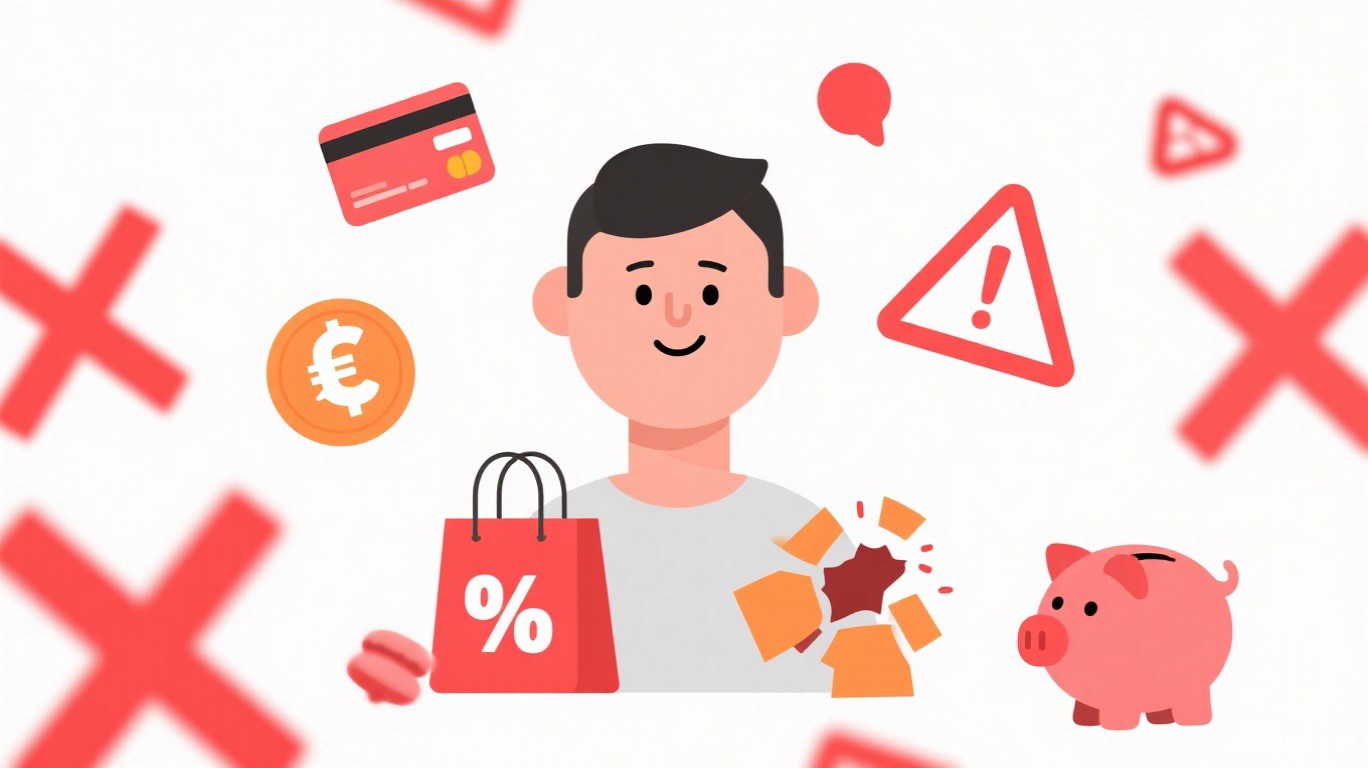
Personal finance is not about having more money. It is about not making the same expensive mistakes over and over again. The average American household loses thousands of dollars every year to behavioral pitfalls that are completely avoidable — not because they lack income, but because no one ever taught them what to look for.
In this article, we break down six of the most financially damaging mistakes that most Americans make — and more importantly, exactly how to fix each one. These are not abstract warnings. These are specific, expensive patterns that show up in millions of bank accounts every single month. Mistake #1: Paying Credit Card Interest Instead of Paying It Down Credit card debt is the most expensive form of consumer debt in America.
The average APR on credit cards in 2026 is above 24% — and that is the published rate. Many cardholders pay significantly more due to penalty rates. If you carry a $5,000 balance on a card at 24% APR, you are paying $100 per month just in interest — before making a single additional charge. According to the Federal Reserve, total revolving credit card debt in the United States exceeded $1.2 trillion in 2025, with the average indebted household carrying approximately $7,000 in credit card balances.
The total interest paid by American consumers on credit card debt annually runs into the tens of billions of dollars. The fix: Use the debt avalanche method. Make minimum payments on all cards, then put every extra dollar toward the card with the highest interest rate. Once that is paid off, roll that payment into the next highest-rate card.
Do not close the account after paying it off — that reduces your available credit and hurts your credit utilization ratio. Keep it open with a zero balance. Mistake #2: No Emergency Fund — At All A 2026 emergency fund survey by Bankrate found that 47% of American adults — representing roughly 122 million people — would not be able to cover an unexpected $1,000 expense without borrowing money or selling something.
This is not a problem that only affects low-income households. It affects middle-class households across the income spectrum who are one medical bill or one car repair away from financial crisis. Without an emergency fund, every unexpected expense becomes a crisis that is solved with a credit card — which starts the interest cycle all over again.
The math is brutal: a $2,000 car repair paid on a credit card at 24% APR, if only minimum payments are made, costs over $3,500 total and takes years to pay off. The fix: Start with a $1,000 starter emergency fund — just enough to handle small emergencies without reaching for a credit card. Then build up to 3 to 6 months of living expenses.
Automate this process. Set up a recurring transfer from your checking account to a high-yield savings account the day after you get paid. You never see it, so you never spend it. Figure 1: Automated savings work while you sleep — no willpower required. Mistake #3: Letting Fees Silently Drain Your Account Bank fees cost Americans an estimated $15.5 billion per year according to the Consumer Financial Protection Bureau.
Overdraft fees alone average $30 to $35 per occurrence, and many account holders trigger multiple overdrafts in a single month — turning a single $50 overspend into a $150+ hole. The average person does not even know they are being charged these fees until they read their statement. Investment fees are even worse over time.
A 1% expense ratio difference in a mutual fund versus a lower-cost index fund sounds trivial. Over 30 years, on a $100,000 portfolio with 7% annual returns, that 1% difference costs you approximately $140,000 in lost growth. The same applies to advisor fees, trading commissions, and account maintenance charges.
The fix: Read your bank statements. Every month. Look for fees, maintenance charges, and anything you do not recognize. Switch to an online bank that charges zero monthly fees and zero overdraft fees. For investing, use low-cost index funds with expense ratios below 0.20%. Every basis point matters — especially when compound interest is working against you over decades.
Mistake #4: Lifestyle Inflation That Outpaces Every Raise You got a 10% raise. Six months later, you are living paycheck to paycheck again. This is not a coincidence — it is a pattern. Lifestyle inflation is the automatic, invisible increase in spending that happens every time your income goes up. The new car, the bigger apartment, the nicer restaurant — none of these feel like big changes individually, but together they consume 100% of every raise you ever receive.
Research from behavioral economists at Princeton and Harvard has consistently found that most people, when given a raise, unconsciously allocate the entire amount to lifestyle improvements. They feel richer without actually building any more wealth. A household making $80,000 that gets a $10,000 raise and immediately upgrades to a $2,000/month apartment is actually worse off financially — not better.
The fix: When you get a raise, immediately move the difference to savings or investments before you change a single thing about your lifestyle. Upgrade your lifestyle by 30% at most — put the other 70% directly into your savings or retirement account. You never adapted to the extra income, so you never miss what you did not spend.
Figure 2: Lifestyle inflation feels like success — but it is a trap that keeps you dependent on your paycheck. Mistake #5: Not Starting Retirement Savings Early Enough Einstein allegedly called compound interest the eighth wonder of the world. He was right. The numbers are so powerful that starting at age 25 instead of 35 can mean the difference between retiring at 65 with $1.2 million and retiring at 65 with $480,000 — even if you contribute the exact same amount every month.
At 7% annual returns, $500/month invested from age 25 to 65 accumulates to approximately $1.6 million. The same $500/month from age 35 to 65 accumulates to only $757,000. The extra 10 years of compounding created over $840,000 in wealth from the exact same contribution pattern — and you did not contribute a single dollar more.
The fix: Start today, regardless of the amount. If your employer offers a 401(k) match, contribute at least enough to capture 100% of the match — that is an immediate 50% to 100% return on your money. Open a Roth IRA if you are eligible. Even $200/month at age 25, invested in a diversified index fund, grows to over $1 million by age 65 at 7% returns.
Mistake #6: Making Complex Financial Decisions Without Understanding Them The average American does not understand the financial products they own. According to the TIAA Institute-GFLEC Personal Finance Index (P-Fin Index), Americans answer only about 48% of basic financial literacy questions correctly on average — and for young adults (ages 18-37), that number drops to just 37%.
Most people buy financial products they do not understand because an advisor sold them something, or because a friend recommended it, or because it was the default option. Figure 3: Complex financial jargon causes most people to make decisions in the dark. The fix: Never sign anything you cannot explain back in one sentence.
If an advisor cannot explain why a product is right for you in plain language, do not buy it. A financial product that you do not understand is always riskier than it needs to be. Index funds, target-date retirement funds, and high-yield savings accounts are not complicated products — and they are the right answer for the vast majority of people.
Warren Buffett’s investment advice for his own estate is to put 90% in a low-cost S&P 500 index fund. If it is good enough for him, it should be good enough for you. The One Pattern That Connects All Six All six of these mistakes share one common thread: they happen automatically, without deliberate decision-making.
Credit card debt accumulates through small purchases. Lifestyle inflation happens without any specific decision. Investment fees are invisible until you look for them. The good news is that if these mistakes happen automatically, their fixes can also be automated. Set up your emergency fund transfer.
Automate your retirement contributions. Pay off your credit cards once and set them aside. These things do not require willpower — they require a single decision followed by automatic execution. Pick one of these six mistakes to fix this week. Just one. The compound effect of making better financial decisions automatically, over years and decades, is more powerful than any raise, any investment tip, or any financial product you will ever be sold.
Tags: Money Mistakes | Credit Card Debt | Emergency Fund | Retirement Savings | Compound Interest | Personal Finance for Beginners
Related Articles

The 50/30/20 Budget Rule: Your Simple Blueprint for Financial Freedom
Learn the simple 50/30/20 budgeting method that helps you allocate your income wisely without compli...

Credit Score Basics: What You Need to Know
Everything you need to understand about credit scores — how they work, why they matter, and how to i...

The Psychology of Money: Why We Make Bad Financial Decisions
Discover the hidden mental biases that sabotage your financial decisions — and learn how to build sy...